
- After a lift, your Jeep will NOT ride like it did when it was stock height (don’t believe the marketing hype or message boards)
- You WILL spend significantly more money on your Jeep after the lift kit is installed
- Lift kits lead to bigger tires. Bigger tires lead to new steering parts, better brakes, gearing upgrades, a stronger tire carrier, refinancing your house, etc.
- Your wife/girlfriend will complain that your Jeep is hard to get into and is scary to drive
- 33-inch tires will start to look tiny. Your brain does strange things in an effort to make you justify that 38’s are the new 33’s
10 reasons NOT to put a lift kit in your Jeep
131 Comments
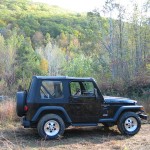 Why, you ask? Well, for the uninitiated, lifting a Jeep typically isn’t as simple as bolting on the kit and then living happily ever after. Suspension lifts, specifically, will change the geometry of how your suspension was originally designed to work. I won’t bore you with the specifics of control arm length, alignment specs, and pinion angles, but suffice to say that you’ll be tweaking all of these at some point after your lift (something the catalogs forget to mention in their marketing copy). So, learn from my experiences young Padawan, and hopefully you’ll save some cash and frustration along the way.